

Written by Ayman Bushra Ishtiyaque Khan, a recent law graduate from Rizvi Law College, University of Mumbai.
In recent years, technology has moved from simple computer record-keeping to advanced tools like predictive policing, e-discovery, and judicial analytics. While police forces are using systems like MARVEL, PAIS, and facial recognition apps to stop crimes and speed up investigations, courts are using AI tools like SUPACE and SUVAS to translate judgments and summarize heavy case files. These tools certainly help save time and handle the massive backlog of court cases. However, their growing use brings up serious problems. India currently lacks a dedicated law to control and check AI algorithms. Most police and court systems rely on older laws like the IT Act of 2000, along with the new BNS, BSA, and DPDP laws, which were not specifically built to handle complex AI issues. Using opaque, “black-box” systems can lead to algorithmic bias, privacy violations under Article 21 of the Constitution, and mistakes caused by deepfakes or private software vendors. By analyzing both the advantages and the legal gaps, this paper discusses how AI is shaping the justice system and how India needs clear, human-focused rules to ensure that technology supports the justice system without hurting basic legal rights and fairness.
Introduction
From the sharp edges of Oldowan stone tools to the logic of modern algorithms, every era of human civilization has been defined by its tools, which continuously shaped our evolution and expanded our capabilities. We moved from enforced survival to written law for organizing complex societies, and now to the usage of advanced artificial intelligence. The justice system is no exception to this continuous shift.
In law enforcement, policing started from basic foot patrolling and local information networks, then moved to forensic sciences, CCTV surveillance, and centralized criminal databases, hand written case files to digitised records and now to electronic evidences known as e-discovery, assistance of AI in both investigation of crime and administration of justice. The justice system may be understood as the constitutional and institutional machinery comprising the police, the judiciary, and other authorities through which the state investigates crime, adjudicates guilt, and administers justice. Within the spheres of this labour intensive justice system, technology is no more an external helper but has become an inclusive part of it. This blog examines the ethical and legal implications of AI in justice system focusing on predictive policing, e-discovery and judicial analytics.
- AI in Predictive policing, E-discovery & Judicial analytics.
The justice system comprises the police, the judiciary, and allied authorities functioning within the constitutional framework of due process. Technological development has increasingly intersected with each of these limbs, most significantly through digitisation, predictive policing, e-discovery, and judicial analytics which are mentioned herein:
- Digitisation (in justice system)
Digitisation refers to the infusion of Information and Communication Technology (ICT) into all levels of the judicial system, from the Supreme Court down to district and subordinate courts replacing paper-based, location-bound processes with trackable, technology-enabled ones.
- AI
Artificial intelligence is defined as “a machine-based system that can, for a given set of human-defined objectives, make predictions, recommendations or decisions influencing real or virtual environments.” In the justice system, AI typically operates through machine-learning models, algorithms fed on historical data i.e crime records, case judgments, litigation documents, etc. to recommend arguments, probable judgements, factual clarity, drafting, etc.
- Predictive Policing
Predictive policing algorithms (PPAs) refer to the use of technologies in data science and artificial intelligence (AI) to predict threats and suggest solutions in law enforcement. Predictive policing is a proactive strategy that uses historical resources, data analysis, technological modelling, statistics and AI algorithms to forecast when, where, by whom and against whom crimes are likely to occur.
- E-Discovery
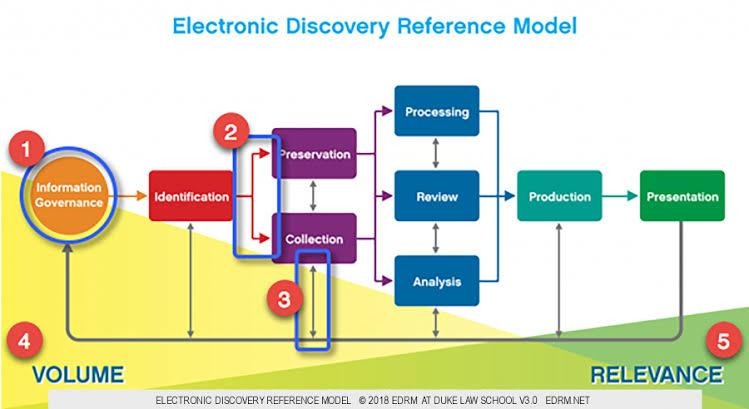
E-discovery is the identification, preservation, collection, review, and production of electronically stored information in litigation. E-discovery allows and eases storage & production of electronic evidence in courtroom.
- Judicial Analytics
Judicial analytics involves the application of data analytics to litigation data, judges’ decisions on cases, motions and appeals, settlement sums, and case duration to generate insight into likely outcomes. Together, these three applications span the full lifecycle of a matter ranging from the police’s initial identification of a suspect, through the evidentiary process, to the court’s final adjudication.
- Law enforcement.
Globally, Predictive policy (PP) in the justice system is being used across various nations. Predictive policy in justice system is mainly divided into 2 categories i.e The Police and the Judiciary.
- THE POLICE
Machine learning algorithms, advanced data analytics, and predictive models used in AI-powered systems identify crime patterns, assess high-risk areas, and estimate risk for any precautionary measure. Such systems push a large amount of previous crime data, enabling the police force to better predict criminal activities, effectively manage patrols, and decrease response time. Facial recognition, anomaly detection, natural language processing, and automated surveillance systems have all contributed to investigative capabilities evolving. These advanced tools help in tracking criminal syndicates, detecting any suspicious activities, and analysing social behaviour trends effectively, empowering authorities to act upon any emergent threats instantly.
According to the Ministry of Law and Justice, India , AI is being used for improving crime tracking and intelligence systems such as Crime and Criminal Tracking Network Systems (CCTNS) and integration with India’s e-Prisons database and e-Forensics database. The Maharashtra Police have launched Maharashtra Advanced Research and Vigilance for Enhanced Law Enforcement (MARVEL), the country’s first state-level police AI system, to improve crime prediction and detection. Additionally, the Uttar Pradesh Police utilize the AI-powered mobile application ‘Trinetra‘ for facial recognition and criminal tracking. It has also launched an AI-powered legal assistance platform called ‘NyaySanhita.in’, which allows users, especially women, to describe incidents in Hindi or English and receive guidance on applicable legal provisions, explanations, and links to the new criminal codes to make justice more accessible.
Delhi Police have been using AI-based image enhancement AMPED FIVE system to clarify low-quality CCTV footage that are matched against various government and private databases, including driving licences, voter rolls, and vehicle records.
In April 2026, the Central Bureau of Investigation (CBI) has created an AI-powered chatbot named ‘Abhay’ to assist in verifying digital arrest scams whether any online notices they receive are authentically issued by the CBI.

The Punjab Artificial Intelligence System (PAIS) under the state government’s ‘Gangstran Te Vaar’ campaign, the Punjab Police developed a specialised Voice Recognition System that allows authorities to identify individuals involved in extortion and criminal threats within minutes. PAIS houses a massive criminal database of more than 3,90,000 offenders. The system includes a ‘Gang Tree Search’ tool that enables investigators to map out the hierarchy of crime syndicates and link local executors to international handlers based in countries like Canada, the United States, and Italy.
- The Judiciary
The Indian judiciary has long been regarded as the guardian of constitutional values, yet it has also struggled with systemic challenges. In such a context, digital justice has emerged as both a necessity and an opportunity. The significant steps taken for digitized justice are hereunder:
- E-Courts.
The first major step came in 2005 with the E-Courts Mission Mode Project focused on automated case management, e-filing, digitizing case records, creating automated cause lists, and enabling online access to case status. Another major milestone was the creation of the National Judicial Data Grid (NJDG), which introduced pendency and disposal data available online.
- SUVAS
The Supreme Court Vidhik Anuvaad Software (‘SUVAS’) is an AI tool for translating documents and orders from English into regional languages, such as Hindi, Punjabi and Gujarati. Launched in November 2019, it uses machine assisted translation, trained by AI.
- SUPACE
The Supreme Court Portal for Assistance in Court Efficiency (‘SUPACE’) is an AI-driven tool assisting judges by summarising case files. The system processes facts and makes them available to judges looking for an input for a decision. ‘SUPACE’ operates in four parts:
| File preview | Converting case files (typically available as PDFs) into text, with a search tool to browse through all files. |
| Chat bot | Text and voice-enabled chat bot helps to give a quick overview of the case. In a matter of minutes, the bot suggests further questions to be asked for better understanding, and the entire question summary can be printed by the user. |
| Logic gate | Fact extraction system for the chat bot is divided into four parts: Synopsis, FAQs, Evidence, and Case Law. These give information about the case such as overview, chronology, and judgment. |
| Notebook | An integrated word processor which truly makes the tool an end-to-end system. A summary of the case can be prepared by simply collating all information auto-extracted from the database using AI. In addition, voice dictation can be used to prepare notes on the drafting tool. |

- Nyaay AI
It is an AI platform used by the Indian Supreme Court and 16 of India’s 25 High Courts and co-founded by PanScience Innovations. The platform is a commercial tool and was co-created with the judiciary to ensure alignment with real judicial needs.
- Legal Framework
India has no specific dedicated statute governing AI in the justice system. However, there exists constitutional principles, technology law, data protection law, criminal law and evidentiary rules that is technology-neutral. The current legal frameworks are hereunder:
- The Constitution
Article 14 becomes relevant where predictive policing produces biased or discriminatory outcomes, while Article 21 read with the Supreme Court’s recognition of privacy as a fundamental right in Justice K.S. Puttaswamy v. Union of India , requires that surveillance and profiling tools like facial recognition satisfy legality, necessity and proportionality.
- The Information Technology Act, 2000,
The Information Technology Act, 2000 (IT Act) is India’s primary cyber law. While drafted before AI became mainstream, it regulates issues closely connected to AI, such as:
- Data protection (Sections 43A, 72A)
- Cyber offences like identity theft, hacking, and cheating using computer resources
- Liability of intermediaries (platforms using AI tools for moderation or content management.
- Sections 43A and 72A address compensation for failure to protect data and punishment for wrongful disclosure. Beyond these, Sections 66C (identity theft) and 66D (cheating by personation using a computer resource) are the standard charges applied to AI-driven impersonation and voice-cloning frauds; Section 66E (violation of privacy) is relevant to unauthorised capture of images, as in unregulated facial-recognition deployments; Section 67A applies where deepfake technology is used to generate sexually explicit content; and Section 69A empowers the government to order blocking of AI-generated or synthetic content, with Section 79’s intermediary safe-harbour determining platform liability for hosting it. The government has itself confirmed, in a recent Parliament reply, that Sections 43, 66, 66C, 66D, 66E, 67A, 78 and 80 of the IT Act are the primary tools currently used to prosecute deepfake-related offences — underlining that India is applying a 2000-era statute to a 2026-era problem rather than legislating afresh.
Though not drafted for AI, it governs electronic records, unauthorised access and intermediary liability relevant to AI-assisted investigation and e-discovery.
- Digital Personal Data Protection Act, 2023
The Digital Personal Data Protection Act, 2023 (‘DPDP Act’) is India’s first comprehensive data protection law. The core operational provisions of the DPDP Act, relating to inter alia:
- consent and corresponding aspects;
- obligations applicable to data fiduciaries; and
- obligations applicable to Significant Data Fiduciaries (entities classified according to factors such as nature and volume of personal data processed)
- The Bharatiya Nyaya Sanhita, 2023
The BNS supplies the substantive criminal law for AI-enabled offences. Section 318 defines cheating; Section 319 penalises cheating by personation , squarely applicable to AI voice-cloning and deepfake impersonation frauds; and Section 336 covers forgery, expressly extending to “false electronic records,” which makes it directly relevant to AI-fabricated documents and evidence. The government has itself relied on Sections 111 (organised crime), 319, 336 and 353 (statements causing public mischief) of the BNS as its primary charges against deepfake misuse. What the BNS does not do, however, is allow an algorithmic prediction to substitute for proof a risk-score generated by a predictive-policing tool can justify further investigation, but it cannot itself establish the mens rea or actus reus the prosecution must prove.
- The Bharatiya Sakshya Adhiniyam, 2023
Electronic evidence — the backbone of e-discovery — is governed by Section 63 of the BSA (not a range of sections; this is the direct successor to the old Section 65B of the Evidence Act, and the two should not be conflated). Section 63(4) now requires a dual certificate: one from the person in charge of the device, and, as a refinement over the old regime, one from a technical expert who verifies the record’s hash value.
f. Institutional and Policy Layer
Outside legislation, NITI Aayog’s Responsible AI strategy and India’s AI Governance Guidelines MeitY (Nov. 2025) provide a non-binding framework for responsible AI under the IndiaAI Mission. Adopting a light-touch regulatory approach, they promote innovation while addressing risks through existing laws and voluntary compliance. The framework is built on seven principles: trust, human-centricity, responsible innovation, fairness, accountability, transparency, and safety. It proposes institutional bodies such as the AI Governance Group, Technology & Policy Expert Committee, and IndiaAI Safety Institute. The January 2026 PSA White Paper further advocates a techno-legal framework, integrating legal compliance and technical safeguards like watermarking and bias detection into AI systems. Organizations are encouraged to adopt Responsible AI policies, self-certification, and standards such as ISO/IEC 42001.
- Merits
- In predictive policing: AI-driven tools convert historical crime data into faster, more targeted patrol allocation, easing the burden on India’s chronically understaffed police force. Systems such as Maharashtra’s MARVEL and Punjab’s PAIS have compressed investigation timelines, for instance, PAIS can identify an extortion caller within minutes against a database of over 3,90,000 offenders while tools like Delhi Police’s AMPED FIVE improve the evidentiary value of low-quality CCTV footage. AI-powered platforms like NyaySanhita.in and the CBI’s “Abhay” chatbot also extend legal literacy and scam-verification directly to citizens, which is itself a meaningful access-to-justice gain.
- In e-discovery: With India’s courts carrying a backlog running into crores of pending cases, the ability of AI to sift emails, messages and documents at a scale no human review team could match is a genuine efficiency gain — it reduces the time and cost of litigation and allows lawyers to focus on judgment calls rather than manual sorting.
- In judicial analytics: Tools like SUPACE reduces the sheer reading burden on judges by auto-summarising case files, while SUVAS’s translation of judgments into regional languages makes court outcomes more accessible to litigants who do not read English. Nyaay AI’s adoption by the Supreme Court and sixteen High Courts suggests these efficiency gains are being taken seriously at the highest levels of the judiciary, with the long-term potential to shorten case-disposal times and make outcomes more consistent.
- Loopholes and Legal-Ethical Gap
Even with the current frameworks of law, in India there is no dedicated statute, no audit mandate because AI in the justice system is regulated only indirectly, there is no Indian law for a predictive-policing model to be independently audited, or for its training data to be checked for bias, before deployment. Even with the existing frameworks, none of it , however, amounts to binding regulation of algorithmic accountability, no explanation standard for a judicial-analytics tool, and no clear rule on liability when one of these systems gets it wrong.
- Infringement of Article 21 (Right to Life and Personal Liberty)
Article 21 guarantees that no person shall be deprived of their life or personal liberty except according to procedure established by law. Predictive policing and judicial AI introduce structural defects that directly undermine this guarantee:
- Violation of Informational Privacy (Justice K.S Puttaswamy v. Union of India, 2017): Predictive policing systems rely on continuous, data aggregation i.e CCTV feeds, facial recognition, location tracking, and social media scraping. Mass processing of personal digital footprints without explicit statutory authorization, clear storage limits, or independent judicial oversight fails the three-fold test of legality, necessity, and proportionality established under Article 21.
- Procedural Unreasonableness (Maneka Gandhi v. Union of India, 1978): Article 21 requires law enforcement procedures to be “just, fair, and reasonable.” Relying on opaque, “black-box” predictive models to justify stops, questioning, or preventive detentions converts a constitutional right into an arbitrary administrative exercise.
- Bias
AI has the potential to be bias in terms of discrimination and fir treatment. Many AI systems have shown to be discriminating while making decisions. For example, AI recruitment tools give preference to men over women because the tools were trained to choose only better efficiency. AI can bring forth societal prejudices and discrimination in its decisions. Moreover, AI, when not trained about deepfakes ends up creating a bias due to misleading content.
- Lack of Transparency & Accountability
If a tool like SUPACE wrongly summarises a case file and a judge relies on that summary, there is currently no legal framework about the burden of mistake if it is upon the developer, the court, or no one, raising real questions about judicial independence. Moreover, the “black box” problem, i.e., no one can know what logical reasoning is relied upon while reaching a conclusion, that too in a system that is supposed to be transparent and reasoned is another significant drawback.
- Private-vendor entanglement.
Several of these tools Nyaay AI, and the facial-recognition systems named in the pending Delhi Police litigation are built and run by private companies, which raises data-sharing and vendor-accountability questions that neither the DPDP Act’s law enforcement exemptions nor the IT Act’s intermediary rules were designed to answer.
CONCLUSION
As Technology has become an undeniable part of India’s justice system, tools like predictive policing, e-discovery and judicial analytics that uses AI offers real solutions to decades of problems like delayed cases, slow investigations, and heavy paperwork. Moreover, it allows police officers to track and dispose crime trends faster and help judges manage huge stacks of files more easily. However, while efficiency is important, it cannot come at the cost of justice and basic human rights. Currently, India’s legal setup is trying to control modern AI tools using older laws that were never designed for this purpose. The total lack of a specific AI law creates big gaps. Issues like hidden algorithmic bias, loss of personal privacy, deepfake fabrications, and reliance on private technology companies put fundamental constitutional rights at risk. If a system predicts crime based on flawed past data, bias or if an AI tool makes a mistake in a court summary, real people suffer the consequences.
As the former Chief Justice of India DY Chandrachud described Artificial Intelligence (AI) as a “double-edged sword” that can improve judicial efficiency while presenting risks of bias and inequality, AI must remain a helpful assistant, not the final decision-maker. Police officers and judges must always apply their own human mind and judgment instead of blindly relying on software outputs. As the saying goes “One should never forget their roots”, we must not rely upon the technology to the extent that it cause human beings to forget their own reasoning skills. At last, the nation urgently needs a clear legal framework that requires regular checks, complete transparency, and proper accountability for all AI systems used in law enforcement and courts. Technology should serve the law, but human rights and constitutional fairness must always come first.
Leave a Reply